
Harvesting Rainwater!
Lessons Learned
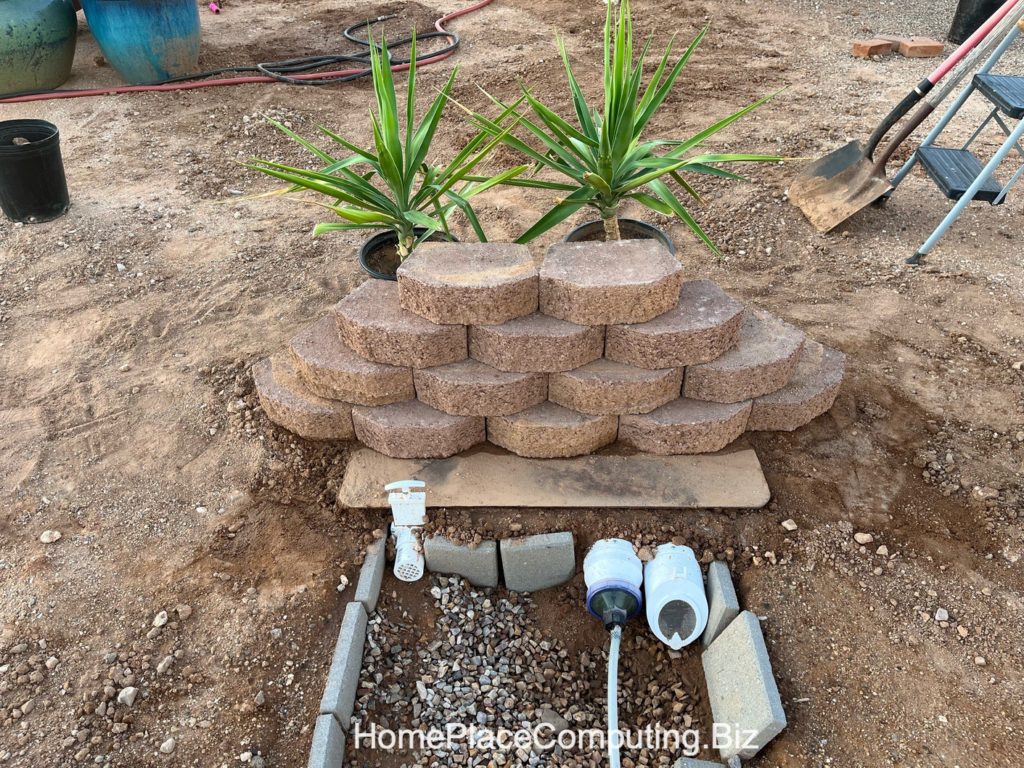
Rainwater from the active system and rooftop catchment is released at the designated “headwater” location.
(From L-R. Slip valve in open position releases water stored in underground conveyance and if left open roof catched water bypasses the tank to headwater (passive). Also used to evacuate “wet conveyance. First Flush drain and the tank overflow… A full tank will immediately deliver to headwater)
There are a few terms that should be made clear.
Pipe or Conveyance
Catchment
Earthwork
Swells
System Types: Wet System versus Dry System
A Dry System is called so because no water is left in the conveyance. This system type, if applicable to your needs is the simplest method of harvesting rainwater. It is characterized (usually) short run of pipe from the gutter directly into the container. Most often the container (vessel) is located directly under the downspout but could also travel any distance necessary (above the vessel) emptying into the vessel… leaving the conveyance emptied of rainwater.
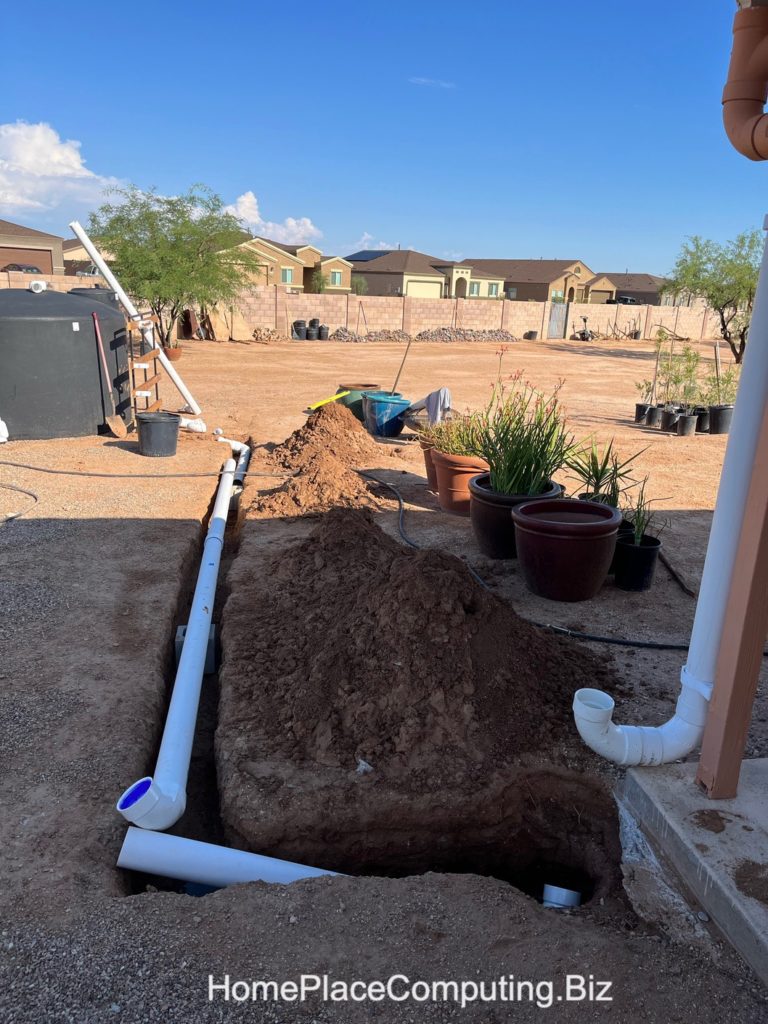
A Wet System is called so because the systems conveyance retains rainwater. The retention of rainwater in the conveyance is the result of the pipe (all or part) being located below the height of the tank. This system design is usually the choice for larger properties and is a more labor intensive (relative to Dry Systems) because it usually means trenching and burying pipes. The system method allows for storage tanks to be located great distances from the catchment location. This can be a plus for those who would rather the tank not be seen so readily and near the building. It is also beneficial when there are multiple downspouts to connect.
Disadvantages of the wet system is that extended periods of stagnated water in the conveyance can be the cause of water contamination. Biology collected from the roof can decompose within the pipe and be forced into the vessel leading to the fouling of stored water. Therefore, a wet system designer should include a means to evacuate wet conveyances.
Catchment is the term used to identify the area that CATCHES to water… Commonly a roof. but it could be any surface including the ground.
Passive versus Active. Passive system in it’s simplest form is management of rainwater on the property in effort to encourage rainwater to stay (or at least linger) on the property by use of earth management techniques which include creating Swells, retention areas with or without rocks and vegetation. With or without a storage vessel.
Terms:
Head Pressure
Differential
Leaf Separator
First Flush
In planning, consider that it is desirable to have a continuous decline in the travel of the pipe to induce the flow of water in a desirable direction to ensure a point exists that the retained volume of water can be evacuated by gravity. There are consideration that are key to accomplishing this.
First.
Establish a tank location that the top of the tank is decidedly lower than the highest point (If the inbound pipe enters the top of the tank (Recommended) account for the pipe when measuring tank height). Be sure to only reference contiguous pipe (no air gap in the pipe). For example if you are installing a Leaf Separator, reference the height of the pipe that the LS is installed on and not the output of the gutter. (See Gravity Syphon Principles.)
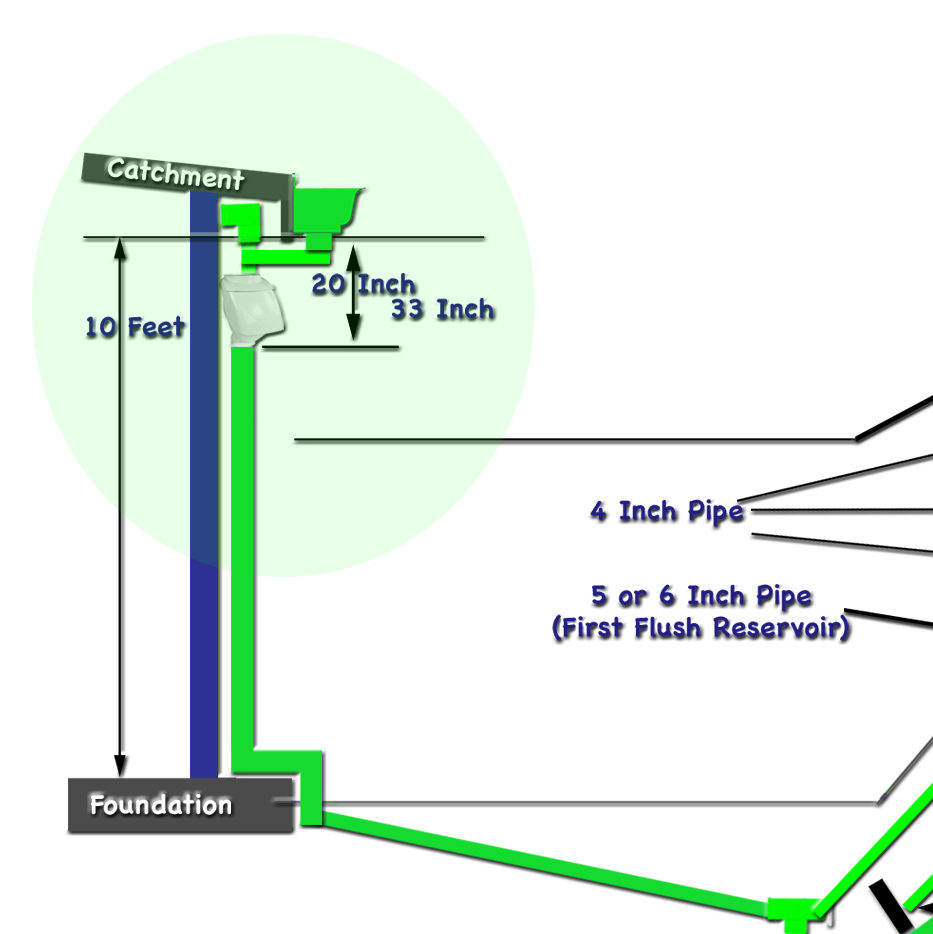
The greater the head pressure differential the easier it will be to move (by gravity) the rainwater from the conveyance to the tank.
Distribution
Relying on gravity to both collect and distribute captured rainwater requires careful consideration. For optimal performance the tank should be higher than the targeted watering locations. If the entire tank is higher you will be able to gravity feed the entire tank volume. Whatever the amount of the tanks volume is at or below the target will remain in the tank due to lack of head pressure. You will also achieve a better GPM flow rate with increased positive differential.
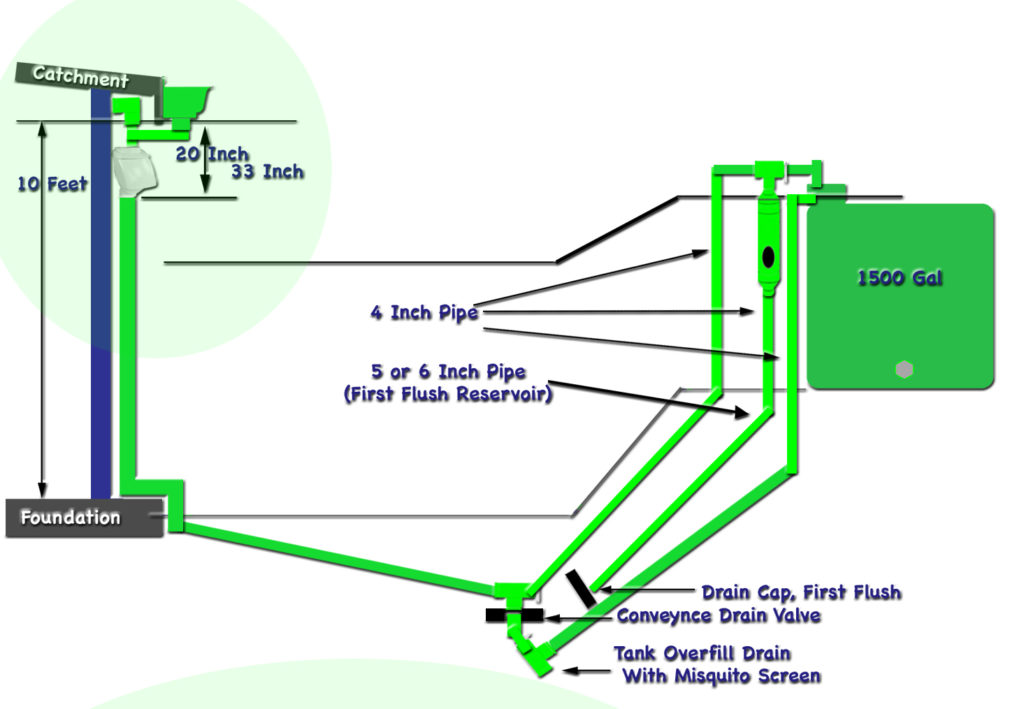
Think of it as a too and a bottom or think of it as a snow topped mountain top to the bottom. Source rain/snow slope/conveyance/downspout storage tank/ lakes
Hi, this is a comment.
To get started with moderating, editing, and deleting comments, please visit the Comments screen in the dashboard.
Commenter avatars come from Gravatar.